


Ask a group of young children to draw a scientist and many will still draw the same familiar image. A lab coat. Wild hair. Test tubes and explosions. Often a man.
Decades of research using draw-a-scientist tasks show that, while children’s views of science are slowly broadening, stereotypes remain stubbornly persistent, particularly in the primary years.
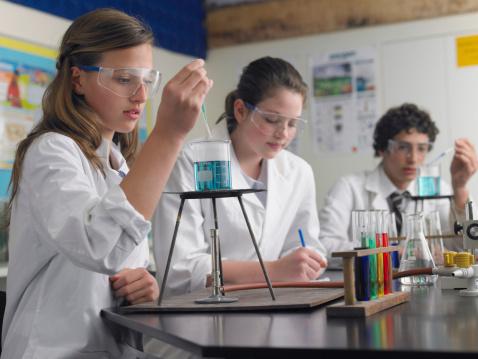
These drawings reflect deeper beliefs about who science is for, who is likely to be good at it, and who belongs.
Long before pupils choose GCSE options, many have already decided whether science feels like something “people like me†do.
Research on science identity suggests these early perceptions shape confidence, participation, and long-term engagement with the subject.
The challenge for teachers is that these beliefs are rarely formed through a single moment or message. They are built gradually, through everyday classroom experiences that often go unnoticed.
How early ideas about science take shape
In the early and primary years, children are highly attuned to patterns. They notice whose ideas are praised, what kinds of examples appear in lessons, and which answers are treated as “scientificâ€.
Over time, these experiences combine to form a quiet narrative about what science looks like and who fits within it.
This is where the idea of science identity becomes useful. A child’s science identity is shaped not just by attainment, but by whether they feel recognised, capable, and included when science is happening.
Closely linked to this is the concept of science capital: the experiences, language, and connections that make science feel familiar and achievable.
When science is presented narrowly, children without prior exposure or confidence may disengage early. When it is framed as something wider and more human, more children begin to see a place for themselves.
Why representation matters more than ever
Representation is often misunderstood as an add-on, something addressed through a display or a themed lesson. In reality, it is embedded in the fabric of daily teaching.
Children notice patterns in the scientists they encounter. If science is repeatedly linked to a narrow set of careers, personalities, or ways of working, children who do not recognise themselves in those patterns may quietly opt out.
This is particularly significant at a time when schools are rightly paying closer attention to inclusion, diversity, and aspiration.
Representation is not about lowering expectations. It is about widening the story we tell about science so that it reflects reality.
Scientists work outdoors and indoors. They collaborate, communicate, test, fail, revise, and try again.
They come from different backgrounds and bring different strengths. When children see this range reflected consistently, science begins to feel more accessible.
Broadening children’s mental picture of scientists
A helpful starting point is to reflect on what children encounter across a typical week of science lessons.
Who appears in the examples you use? What kinds of problems are being explored? Where does the science seem to take place?
Many children still associate science with a narrow set of images and settings. Introducing short, regular references to a wider range of people working in science-related roles can help challenge these assumptions.
These do not always need to be detailed biographies. Brief mentions of a marine biologist tracking pollution, a technician maintaining hospital equipment, or an engineer designing safer playground surfaces can expand children’s understanding of who scientists are and what science looks like in practice.
Crucially, these examples work best when they are woven naturally into lessons rather than presented as special events.
The aim is not to single out differences, but to normalise variety and show that science is done by many kinds of people, in many places, for many purposes.
Language that invites everyone in
One of the simplest and most effective shifts teachers can make is in how they talk about science learning.
When praise consistently centres on getting the right answer quickly, rather than also valuing scientific thinking and process, children who are cautious or less confident may conclude that science is not for them.
By contrast, linking feedback to scientific behaviours helps all children see themselves as legitimate participants.
Observing carefully, asking questions, explaining thinking, testing ideas fairly, and changing your mind in response to evidence are all things children can practise, regardless of starting point.
Using phrases such as “You’re thinking like a scientist because…†helps reposition science as something children do, rather than a fixed label about who they are.
The power of talk routines
Classroom talk plays a central role in shaping scientific identity. Children need regular opportunities to articulate ideas, hear others’ thinking, and refine their explanations.
Simple structures can make a significant difference. Sentence stems such as “I notice…â€, “I wonder…â€, and “I think this because…†support children in sounding and feeling more scientific.
Pair talk before whole-class discussion gives everyone a rehearsal space and increases participation, particularly for children who rarely volunteer.
Over time, these routines help children internalise the language and habits of science, making them feel more confident contributing.
Making careers links feel real
Career education does not need to wait until secondary school. Even in primary classrooms, small and specific links can help children understand how science connects to the world beyond school.
For example, observation skills can be linked to the work of vets, comparing evidence to forensic science, or testing materials to the work of sound engineers.
These moments help children see science as purposeful and relevant, rather than abstract.
Research suggests that early exposure to a wide range of science-related careers is particularly important for children who may not encounter these roles outside school.
When they can see where science might lead, and how it relates to real lives and communities, engagement and aspiration are more likely to grow.
A final thought
Helping children see themselves as scientists is not an optional extra. It is part of inclusive, high-quality science teaching.
When we broaden the stories children hear about who does science, and when we make scientific thinking something everyone practises every day, we open doors that might otherwise close quietly and early.
Small, intentional choices in language, examples, and routines can have a lasting impact.
In doing so, we help more children leave the classroom thinking, with confidence, “Science is for people like me.â€
Article by Sarah Hutson – Twinkl’s National Education Lead for Primary Science


